

From Cotton to Cloth: The Maya Weaving Technique Behind Every Trama Textile
At Trama Textiles, we take pride in preserving the ancestral art of Maya weaving. Our process begins with the careful selection of 100% cotton thread, followed by hand-spinning, dyeing, and weaving using the traditional backstrap loom.

Step 1: Handspinning Cotton Thread in Guatemala
While Guatemala may not be globally recognized for its cotton production in some regions of this country, such as Zacapa, this valuable crop thrives. Cotton requires warm temperatures and significant water resources, making its cultivation labor-intensive and environmentally demanding.
After harvesting, either manually or by machine, the cotton fibers must be carefully separated from seeds, stretched, and prepared for spinning. Our weavers use hand-spinning techniques, carefully pulling and twisting the fibers to form the fine, durable cotton thread used in our products.


Step 2: Natural and Traditional Maya Dyeing Techniques
At Trama Textiles, we embrace both natural and non-toxic synthetic dyes to create our vibrant color palette. Natural dyes are sourced from local plants, insects, and minerals, following ancient Maya traditions. Before dyeing, the cotton is soaked in a natural fixative to ensure color longevity. The yarn is then boiled for hours, depending on the desired hue.
Common natural dye sources include:
Indigo plant→ blue
Chilca plant → Green
Copal tree → Grey
Avocado pits → Pink
Beetroot, guava, cinnamon, and basil → A variety of hues
To learn more about about Maya dyeing techniques explore our extensive guide to the process at Trama Textiles.
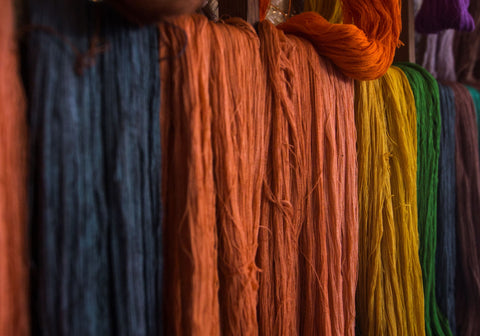
Step 3: Preparing The Yarn - Debanadera Process
Once dyed, the yarn undergoes a process called debanadera, where two skeins of yarn spin on rotating gears to create a single braided thread. This unique double-threading technique enhances the durability and thickness of the fabrics. The warp design is then measured and arranged on a wooden plank called an urdidor, ensuring precision before the weaving process begins.

Step 4: The Backstrap Loom Weaving Method
At the heart of our craftsmanship is the backstrap loom, or Telar de Cintura—a centuries-old Maya weaving technique. The women of Trama Textile's work to support their families and perserve the ancient tradition of backstrap loom weaving. The products take a wide range of time. A natural dye dress will take an average of 30 hours of dedicated labor. In comparison, a button up shirt will take an average of 45 hours to weave.
How It Works:
- The weaver will create a design full of symbolism and meaning. Each pattern is done through embroidery during the weaving process.
-
The loom consists of planks and ropes attached to a weaver’s back and a fixed post or tree.
-
The tension created by the weaver’s body allows for precise control over the weaving.
-
The weaver sits on the ground, often weaving as part of a family or community activity.

At Trama Textiles, we are more than just weavers—we are storytellers, cultural preservers, and community builders. Each woven piece is a testament to Maya history, resilience, and artistic mastery.
Shop our handcrafted textiles today and bring a piece of Guatemalan tradition into your home.